
In Tribute: Dr. John Esposito (1940-2026)
When I was writing my 2011 book on Christian identity in a multi-faith world (Why Did Jesus, Moses, the Buddha, and Mohammed Cross the Road?), I came across the work of Dr. John Esposito.
In many ways, John epitomized the message of the book: that it is possible, desirable, and needed for more Christians to discover a strong Christian identity that sends them into the world with genuine respect, curiosity, and love for their neighbors, whatever their religious identity. Not only that, but genuine love for our neighbors will lead to respect, curiosity, and love for all that is good, beautiful, and true in our neighbors’ religions.
I first devoured “Who Speaks for Islam?” — never dreaming I would meet both John and his co-author, Dalia Mogahed. Then I read several of his other books.
Then, when I met John and his equally brilliant and good-hearted wife, Jean, I never dreamed we would become neighbors and friends.
John’s accomplishments were legendary, and you can read a good summary of them here, at the website of the center for Muslim-Christian understanding he founded: https://acmcu.georgetown.edu/announcements/john-louis-esposito-1940-2026/
John was an avid runner and aged well; he finished his race on Julyl 15, at the age of 86.
I will be forever grateful to and for John Esposito, a scholar, a peacemaker, a leader, and friend.
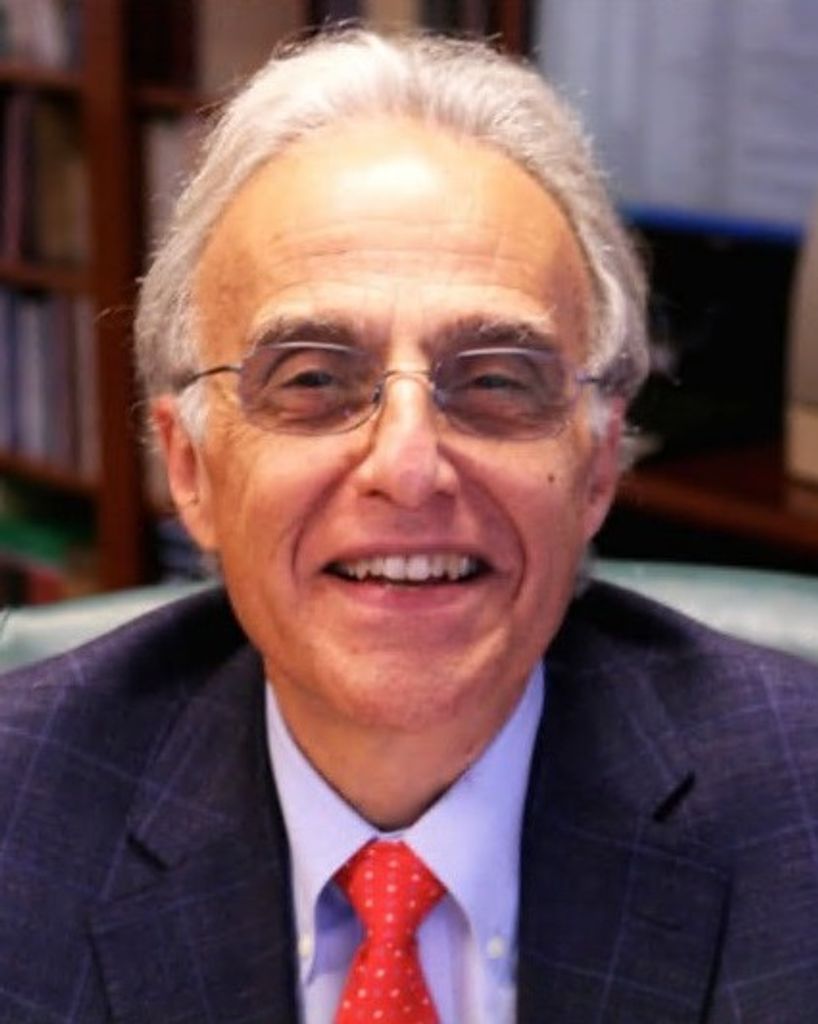
If you knew John or read any of his works, or if you are curious to know more about him, I recommend these words from his wife, Jean, spoken at the end of his funeral mass, shared here with Jean’s permission:
Looking back on his life, I believe it’s true to say that John had always been
religious and spiritual at his core. Choosing to enter a strict monastery at
14 and continuing his studies and prayer as a Capuchin Franciscan until
age 24 gave him a deep experience of God and Spirit that would inform his
life’s work forever after.
During his doctoral work at Temple University, grad students were required
to study all of the world’s great religions. As a result, John became
fascinated with Islam, which is the second largest religion in the world,
after Christianity. He discovered that Muslims are monotheists; they honor
the prophets of the Hebrew Bible, including Abraham and Moses and in the
New Testament Muslims revere Jesus, John the Baptist and the Virgin
Mary. They also believe in Angels, Heaven, Hell and the Day of Judgment.
Looking back on John’s life and career as a scholar of Islam reminded me
of a short ancient prayer, The Sarum Prayer, which comes from a liturgical
rite dated as early as 1527. This prayer’s focus is on God who dwells within
us. I’d like to share it with you.
The Sarum Prayer is a Meditation that you can say over and over to
deepen your conscious contact with the Spirit who is always with us.
It goes like this:
God be in my head – and in my understanding
God be in my eyes – and in my looking
God be in my mouth – and in my speaking
God be in my heart – and in my thinking
God be at my end – and at my departing
This first line, God be in my head and in my understanding, reflects so
much of John’s life’s work. We usually link the word “understanding” to
thinking, but instead having Divine presence in our head requires
something different. We need to think of what it feels like to be truly
understood by someone. To ask God to be in my head and in my
understanding is to be willing to understand someone or something from a
different vantage point. It makes me remember the quote in Isaiah “Your
thoughts are not my thoughts” or Jesus saying in Matthew, “Judge not, lest
you be judged”. Throughout his long career as an Islamic scholar John’s
emphasis has been on helping us to see from a different vantage point, to
better reach our goal of Muslim-Christian Understanding. This is a focus
that John worked for most of his life and which, I believe, if taken seriously,
would truly change our world.
The second line of the Serum Prayer, “God be in my eyes and in my
looking” reminds me of what John saw as he studied the interaction of
Christians and Muslim, past and present. John looked at the Muslim world
and Muslims not from a narrow, frightful, hostile lens but from a wide
perspective, within a broad context and then what he saw were the
complex interactions and connections, positive and negative, of Christianity
and Islam throughout history. And he communicated what he learned with
humor and passion in classrooms, public speeches, interviews and
writings. John was a talented communicator.
In the third line of the Sarah prayer “God be in my mouth and in my
speaking“ I see that what came out of John’s mouth was designed to
counter fear, hatred and prejudice. John created a comfortable space for
understanding, using humor and always giving us the context to deepen
what we need to know about Muslims and the Muslim world.
In the fourth line of the Sarum Prayer, “God be in my heart and in my
thinking” I think that true understanding kind of requires humility, being
conscious that we don’t know everything and wanting to know it better.
To ask for understanding is to ask for a different vantage point from our own.,
to be willing to think with our heart. As Nader Hashmi said in his recent
tribute, John “sought to understand and interpret religious politics not from
the perspective of empire, but rather from the vantage point of the
downtrodden, the occupied and the oppressed.”
Muslims worldwide have greatly appreciated John’s understanding of their
faith, but many wondered how someone who knew their religion so well did
not become a Muslim himself. From another vantage point, John, as a
spokesman for Islam, was in a unique position – he was a believing
Christian, an outsider, who could represent Islam and Muslims to others of
different faiths or no faith. He could present the truth fairly and objectively,
without being accused of being biased or defensive and this is what he was
created to do.
And so we move to the last line of the Sarum Prayer “God be at my end
and at my departing“.I believe that God has always been with John and
especially when John was leaving this world, I envision God holding him
close and saying to him, “Well done, good and faithful servant!”
